
Forex Card vs Debit Card vs Cash – What Should You Choose for Your Next International Trip?
Planning an international trip is exciting—but figuring out how to carry your money can be confusing. Should you carry cash? Use your debit card? Or go for a forex card? Each option has its own pros and limitations. The smart choice is not just about convenience—it’s about safety, cost, and control over your expenses.
Let’s break it down in a simple, practical way.
1. Understanding Your Options
Forex Card
A forex card is a prepaid travel card loaded with foreign currency before you travel. It works just like a debit card but isn’t linked to your bank account.
You can swipe it at stores, use it online, or withdraw local cash from ATMs.
Think of it as your travel wallet—secure and pre-planned.
Debit Card
Your regular debit card allows you to withdraw money abroad or pay at international merchants.
But here’s the catch—every transaction may come with additional charges like forex markup and ATM fees.
Cash
Carrying local currency is the oldest and simplest method.
It’s useful—but only to an extent.
2. Where Each Option Works Best
- Forex Card: Ideal for everyday expenses like shopping, dining, and travel bookings abroad
- Debit Card: Best kept as a backup for ATM withdrawals
- Cash: Useful for small purchases or when you’ve just landed
Pro Tip: Always carry a mix instead of relying on just one option.
3. Safety Matters More Than You Think
When you’re in a foreign country, losing money can be a nightmare.
- Forex Cards are the safest—they’re not linked to your bank and can be blocked or replaced easily
- Debit Cards are riskier since they’re directly connected to your bank account
- Cash is the least secure—once lost, it’s gone forever
4. Exchange Rates & Hidden Costs
This is where most travelers lose money without realizing it.
- Forex Cards: Offer relatively stable and competitive exchange rates
- Debit Cards: Rates fluctuate daily and include additional fees
- Cash: Often exchanged at higher rates, especially at airports
Forex cards also help you avoid unexpected fluctuations by locking rates in advance.
5. Charges & Fees
Let’s talk about the real cost of using each option:
- Forex Cards: Usually minimal or zero transaction fees
- Debit Cards: May include 2%–4% forex markup + ATM withdrawal fees
- Cash: No transaction fee—but poor exchange rates can cost more overall
6. Convenience & Control
- Forex Cards: Allow you to preload a budget and track expenses easily
- Debit Cards: No spending control—you may overspend unknowingly
- Cash: Limited usability and no backup if it runs out
7. So, What’s the Best Choice?
There’s no one-size-fits-all answer—but here’s the smartest strategy:
- Use a forex card for most of your spending
- Keep a debit card as backup
- Carry a small amount of cash for emergencies
This balanced approach ensures safety, flexibility, and cost-efficiency.
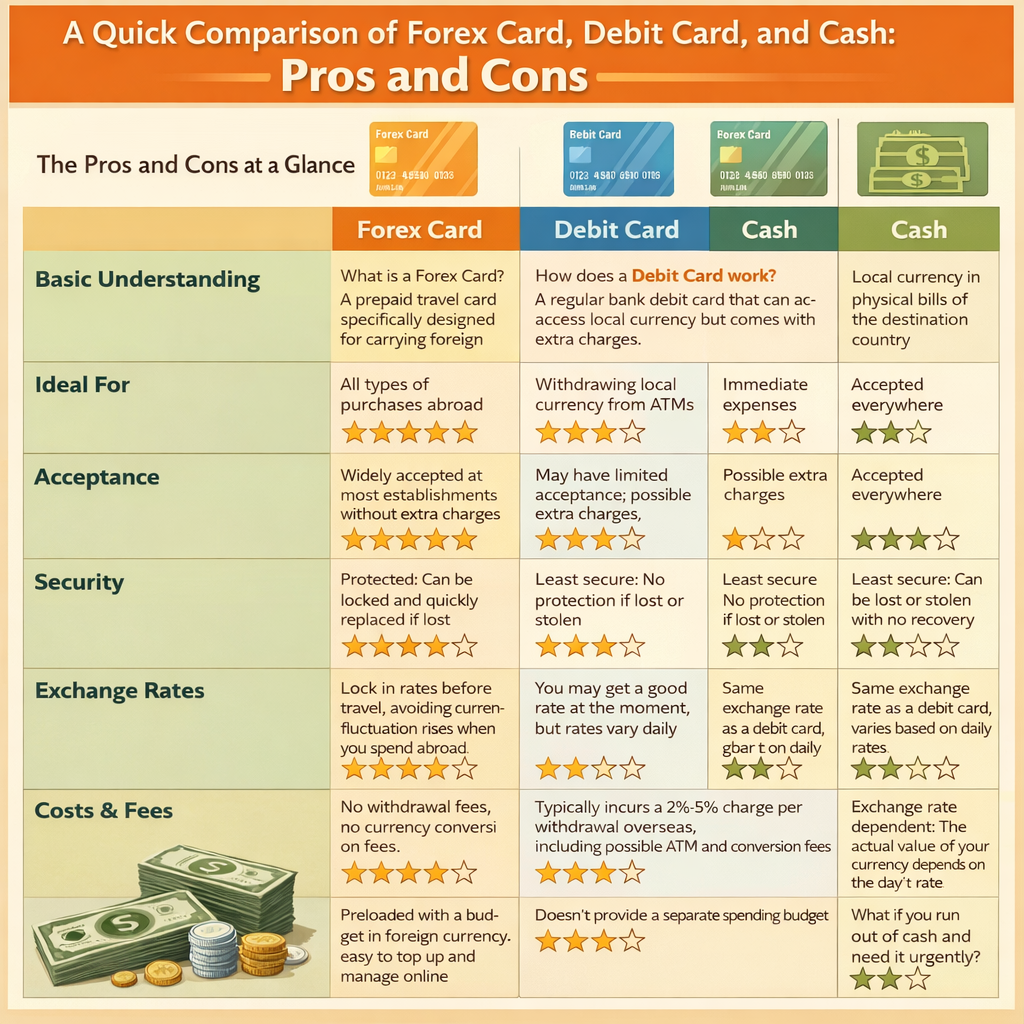
A quick visual guide comparing forex cards, debit cards, and cash for smarter travel money decisions
Why Choose Trade Wings Limited for Currency Exchange?
At Trade Wings Limited, we make your international travel hassle-free with:
- Competitive exchange rates
- Secure and reliable forex solutions
- Expert guidance for travelers
- Quick and convenient service
Whether you’re a student, tourist, or business traveler—we ensure your money works smarter abroad.