
Discover the Top 10 UNESCO World Heritage Sites in India – A Journey From North to South
India is not just a country you visit—it is a civilization you experience. From ancient cities carved in stone to monuments that changed the course of world history, India’s cultural and natural legacy is vast, layered, and deeply moving. Among the many symbols of this legacy, the UNESCO World Heritage Sites in India stand apart as globally recognized treasures that tell stories of human creativity, spiritual thought, architectural brilliance, and harmony with nature.
UNESCO World Heritage Sites are selected for their “outstanding universal value.” When a site earns this status, it is acknowledged as something that belongs not just to one nation, but to humanity as a whole. India, with its thousands of years of recorded history and extraordinary geographical diversity, is home to some of the most remarkable heritage sites in the world.
In this descriptive journey, we explore the Top 10 UNESCO World Heritage Sites in India, traveling from the northern plains to the southern peninsula. Each destination reveals a different chapter of India’s story—empires and dynasties, devotion and artistry, nature and resilience.
Why UNESCO World Heritage Sites in India Are So Special
What makes the UNESCO World Heritage Sites in India truly unique is their diversity. Few countries can showcase such a wide range of heritage within a single border—Mughal mausoleums, Buddhist monasteries, Hindu temple towns, rock-cut caves, medieval forts, and vast natural ecosystems.
These sites are living classrooms. They allow travelers to walk through centuries, understand how societies evolved, and witness how art, science, religion, and governance shaped civilizations. They also play a crucial role in preserving history for future generations, ensuring that development never erases memory.
Let us now begin our journey across India’s most iconic UNESCO-recognized landmarks.
1. Taj Mahal, Agra – A Monument of Eternal Love
No discussion on UNESCO World Heritage Sites in India can begin without the Taj Mahal. Located in Agra, this ivory-white marble mausoleum is one of the most recognized monuments on Earth.
Built in the 17th century by Mughal Emperor Shah Jahan in memory of his beloved wife Mumtaz Mahal, the Taj Mahal is more than architecture—it is emotion carved in stone. Its perfect symmetry, intricate inlay work, Quranic inscriptions, and changing hues throughout the day create an almost surreal experience.
The Taj Mahal stands as a symbol of love, loss, and artistic perfection. As the Yamuna River flows gently beside it, the monument continues to inspire poets, architects, and travelers from around the world.
2. Red Fort, Delhi – The Power Centre of Mughal India
In the heart of Old Delhi rises the imposing Red Fort, a UNESCO World Heritage Site that once served as the seat of Mughal power. Built by Emperor Shah Jahan, this massive fort complex represents the political and cultural zenith of the Mughal Empire.
Behind its towering red sandstone walls lie elegant palaces, audience halls, and gardens that reflect Persian, Timurid, and Indian architectural influences. The Red Fort is also deeply connected to modern Indian history, as it is from here that the Prime Minister addresses the nation every Independence Day.
Walking through the Red Fort is like stepping into a time when emperors ruled vast territories and Delhi was the center of a global empire.
3. Qutub Minar, Delhi – The Rise of Indo-Islamic Architecture
Another jewel among the UNESCO World Heritage Sites in India is the Qutub Minar. Standing over 70 meters tall, it is the tallest brick minaret in the world and a defining landmark of Delhi.
Constructed in the early 13th century, the Qutub Minar complex represents the beginning of Islamic architecture in India. The tower’s fluted design, intricate calligraphy, and red sandstone construction reflect extraordinary craftsmanship.
Surrounding the minaret are ancient ruins, mosques, and the mysterious Iron Pillar, which has resisted rust for over a thousand years. Together, they tell the story of cultural transition, adaptation, and innovation.
4. Khajuraho Group of Monuments, Madhya Pradesh – Art, Devotion, and Human Expression
The Khajuraho temples are among the most fascinating UNESCO World Heritage Sites in India. Built between the 9th and 11th centuries by the Chandela dynasty, these temples are celebrated for their detailed sculptures and architectural harmony.
While often known for their erotic carvings, Khajuraho’s true significance lies in its holistic portrayal of life. The sculptures depict gods, celestial beings, musicians, dancers, everyday villagers, and intimate human relationships—reflecting a worldview where spirituality and worldly life coexist.
Khajuraho challenges narrow interpretations of heritage and reminds visitors that ancient Indian culture embraced art, emotion, and philosophy in equal measure.
5. Sanchi Stupa, Madhya Pradesh – The Soul of Buddhist India
5. Sanchi Stupa, Madhya Pradesh – The Soul of Buddhist India
Among the oldest stone structures in India, the Sanchi Stupa is a serene and spiritually powerful UNESCO World Heritage Site. Commissioned by Emperor Ashoka in the 3rd century BCE, it stands as a testament to the spread of Buddhism across the Indian subcontinent.
The Great Stupa’s massive hemispherical dome shelters sacred relics, while its beautifully carved gateways narrate stories from the life of Buddha. Unlike grand temples or forts, Sanchi’s power lies in its simplicity, silence, and symbolic depth.
For those seeking inner calm and historical insight, Sanchi offers an experience that is both meditative and enlightening.
6. Ajanta Caves, Maharashtra – Paintings That Defy Time
6. Ajanta Caves, Maharashtra – Paintings That Defy Time
Hidden in a horseshoe-shaped valley in Maharashtra, the Ajanta Caves are among the most artistically significant UNESCO World Heritage Sites in India. These rock-cut caves, dating from the 2nd century BCE to the 6th century CE, house some of the finest surviving examples of ancient Indian painting.
The murals and sculptures at Ajanta depict the life of Buddha, royal courts, and everyday scenes with remarkable realism and emotional depth. Despite centuries of darkness and neglect, the colors and expressions remain astonishingly vivid.
Ajanta is not just a site to see—it is a place to feel history breathe through art.
7. Ellora Caves, Maharashtra – Unity Carved in Stone
7. Ellora Caves, Maharashtra – Unity Carved in Stone
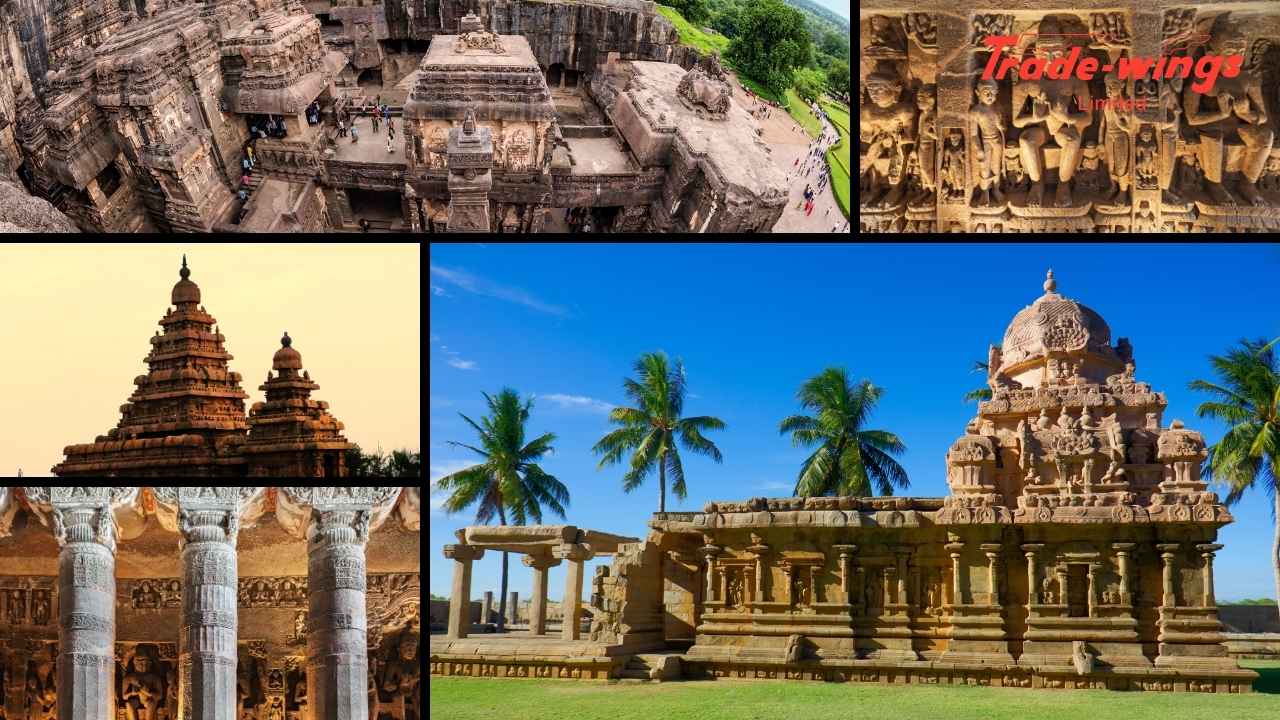
Located close to Ajanta, the Ellora Caves present a different but equally powerful story. This UNESCO World Heritage Site is unique for housing Buddhist, Hindu, and Jain monuments within the same complex.
The most awe-inspiring structure here is the Kailasa Temple, carved entirely from a single rock. It is considered one of the greatest engineering feats in ancient architecture.
Ellora represents religious harmony and coexistence, proving that different belief systems once thrived side by side, sharing artistic and cultural space.
8. Group of Monuments at Hampi, Karnataka – The Ruins of a Glorious Empire
8. Group of Monuments at Hampi, Karnataka – The Ruins of a Glorious Empire
Hampi is one of the most visually striking UNESCO World Heritage Sites in India. Spread across a dramatic landscape of boulders, rivers, and ruins, Hampi was once the capital of the mighty Vijayanagara Empire.
The site is dotted with temple complexes, royal enclosures, marketplaces, and stone chariots that speak of immense wealth and architectural ambition. Even in ruins, Hampi radiates grandeur.
Walking through Hampi feels like exploring a forgotten world, where mythology, history, and nature merge seamlessly.
9. Mahabalipuram, Tamil Nadu – Where Stone Meets the Sea
9. Mahabalipuram, Tamil Nadu – Where Stone Meets the Sea
On the Coromandel Coast of Tamil Nadu lies Mahabalipuram, a UNESCO World Heritage Site celebrated for its rock-cut temples and coastal beauty.
Built during the Pallava dynasty, the monuments here include cave temples, monolithic rathas, and the famous Shore Temple overlooking the Bay of Bengal. These structures mark an important phase in the evolution of Dravidian architecture.
Mahabalipuram’s blend of art, spirituality, and oceanic backdrop creates a timeless and tranquil atmosphere.
10. Great Living Chola Temples, Tamil Nadu – Architecture That Still Lives
10. Great Living Chola Temples, Tamil Nadu – Architecture That Still Lives
The Great Living Chola Temples form the final chapter in our journey through the top UNESCO World Heritage Sites in India. These temples—located in Thanjavur, Gangaikonda Cholapuram, and Darasuram—represent the pinnacle of Chola dynasty architecture.
Unlike many ancient monuments, these temples are still active centers of worship. Their towering vimanas, detailed sculptures, and precise proportions reflect advanced knowledge of engineering, astronomy, and art.
They are called “living” temples because tradition continues within their ancient walls, connecting past and present seamlessly.